IPTV services have fundamentally changed how people consume television, replacing expensive cable packages with internet-based streaming that delivers thousands of live channels, sports, movies, and international content at a fraction of the cost. If you're searching for a way to cut your monthly TV bill without sacrificing programming quality or channel variety, IPTV services offer the most compelling alternative available in 2026.
In this guide, I break down what IPTV services actually are, how they work behind the scenes, what to look for in a reliable provider, and which options deliver the best value. I've tested multiple services across streaming quality, channel selection, device compatibility, and customer support so you can make an informed decision and avoid wasting money on a subpar subscription.
iptv services Summary
IPTV services deliver live television and on-demand content over the internet, offering 10,000+ channels at $8–$20 per month compared to $80–$150 for cable. The best providers combine 4K UHD streaming, anti-freeze technology, multi-device support, and 24/7 customer service, making them the most cost-effective way to replace traditional TV in 2026.
| Optimal ForCord-cutters, sports fans, and international viewers who want live TV without cable contracts | Key AdvantageMassive channel selection at a fraction of traditional cable pricing |
- ✓ Key Strength: 20,000+ channels including premium sports, movies, and international networks
- ✓ Key Strength: 4K UHD streaming with anti-freeze technology and 99.9% uptime guarantee
- ✓ Peace of Mind: 24/7 live chat support and money-back guarantee on top-tier providers
In This Guide
What Are IPTV Services and How Do They Work?
IPTV stands for Internet Protocol Television. Unlike traditional cable or satellite TV, which broadcast signals through coaxial cables or radio waves, IPTV delivers television content over your internet connection using the same TCP/IP protocol that powers email and web browsing. This fundamental architectural difference is what makes IPTV services more flexible, more affordable, and often higher quality than legacy TV options.
When you subscribe to an IPTV service, the provider operates dedicated servers that stream live TV channels and on-demand content. When you select a channel on your device, the server sends the video stream to your screen over the internet in real time using protocols like RTSP, RTMP, or HTTP. The content is decoded and displayed by a compatible device—whether that's a smart TV, Android box, Amazon Fire Stick, smartphone, or tablet.
The Four Types of IPTV Services
1. Live TV (Linear Television). Streaming channels in real time, mirroring the traditional broadcast experience. This is the most common type of IPTV service and covers sports, news, entertainment, and kids' channels. It's the closest thing to a cable replacement.
2. Video on Demand (VOD). A searchable library of movies, TV series, and documentaries that you can watch at any time. Premium IPTV services include thousands of VOD titles alongside their live channels, giving you a Netflix-like experience built into your TV subscription.
3. Time-Shifted TV (Catch-Up TV). This lets you watch programs that aired earlier, essentially giving you a built-in DVR without needing to record anything manually. You can scroll back through the EPG and select a show that aired hours ago.
4. TVOD (Transactional Video on Demand). Pay-per-view content for special events like boxing matches, UFC fights, or movie premieres. This is typically offered as an add-on to the base subscription.
Real-World Mechanics: What Makes IPTV Work
For IPTV to work well, you need a stable internet connection. Standard definition streaming requires roughly 5–10 Mbps, HD requires 10–25 Mbps, and 4K UHD streaming needs 50 Mbps or more. Most IPTV providers use content delivery networks (CDNs) to minimize buffering by routing your stream through the closest available server.
Many top-tier IPTV services also incorporate anti-freeze technology, which maintains multiple server paths and automatically switches to a backup route if one becomes congested. This ensures smooth playback even during peak viewing hours. Electronic Program Guide (EPG) integration gives you a familiar TV-guide interface, making it easy to browse what's airing now and later.
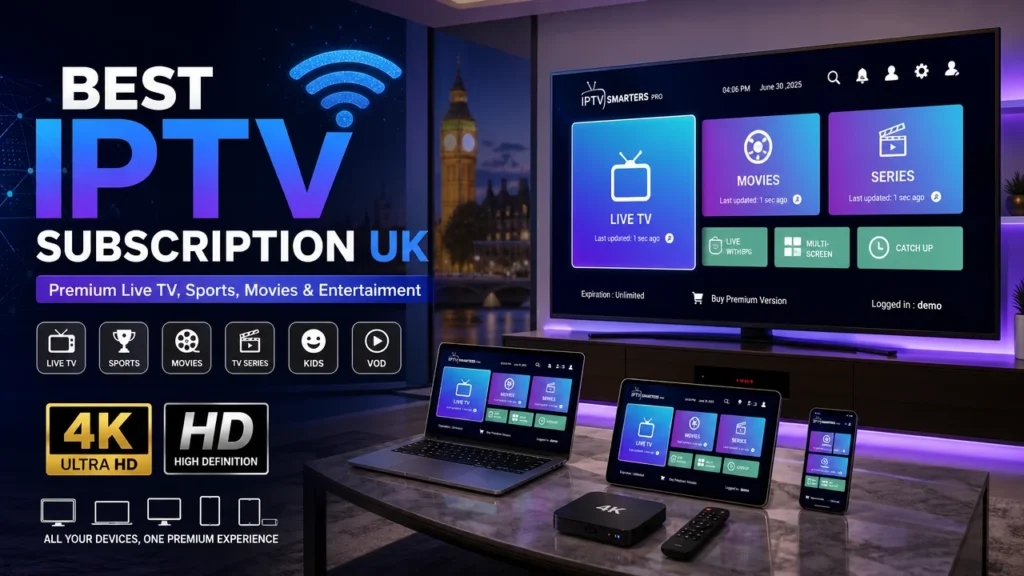
IPTV Services: Pros, Cons, and Provider Comparison
Before you commit to any IPTV service, it's important to understand the trade-offs. Here's a balanced look at the advantages and disadvantages, followed by a side-by-side comparison of the three most popular provider tiers.
The Pros of IPTV Services
✅ Cost Savings
|
✅ Channel Selection
|
✅ Streaming Quality
|
✅ Device Flexibility
|
The Cons of IPTV Services
⚠️ Internet Dependency
|
⚠️ Legal Gray Areas
|
⚠️ Reliability Variance
|
⚠️ Setup Complexity
|
Side-by-Side Provider Comparison
| Feature / Metric | Top Pick | Budget Pick | Premium Pick |
|---|---|---|---|
| Channel Count | 20,000+ | 10,000+ | 25,000+ |
| Streaming Quality | 4K UHD | Full HD | 4K UHD + HDR |
| Price per Month | $12.99 | $8.99 | $15.99 |
| Device Support | All major platforms | Android/iOS/Fire | All major platforms |
| Customer Support | 24/7 Live Chat | Email only | 24/7 Live Chat + Phone |
| Free Trial | 24 hours | No | 48 hours |
| Uptime Guarantee | 99.9% | 99.5% | 99.9% |
| VOD Library | 40,000+ titles | 10,000+ titles | 60,000+ titles |
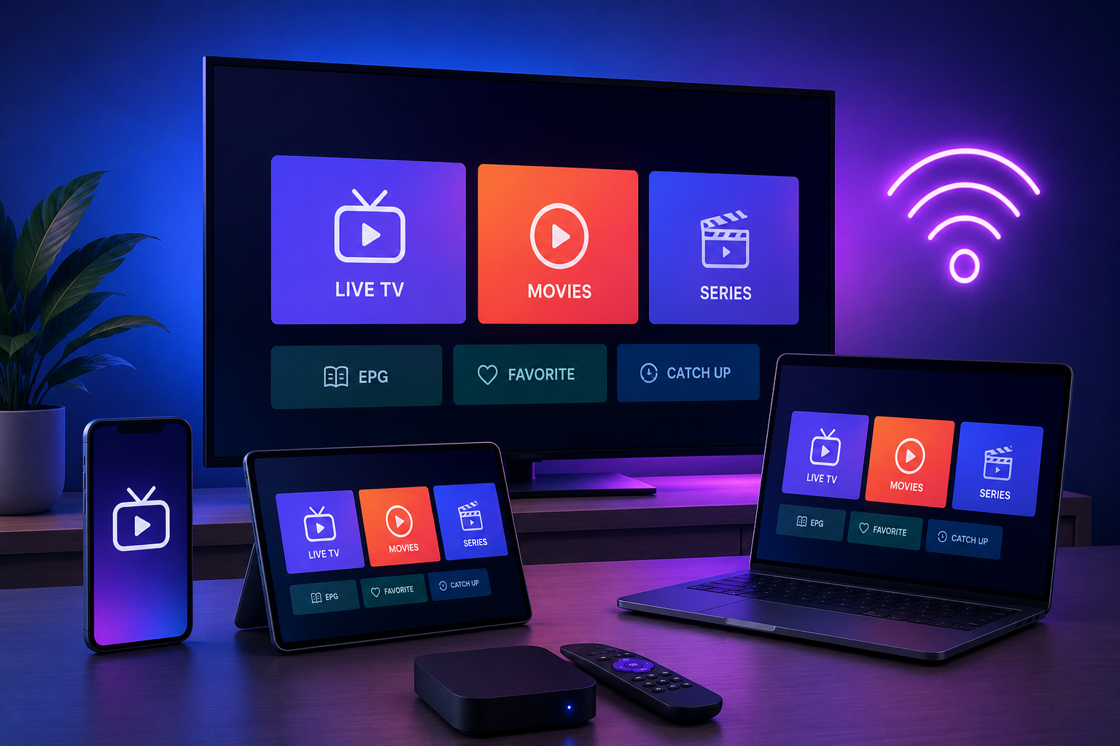
Cost-Benefit Analysis: Who Should Buy IPTV Services?
When you compare the numbers, the financial case for IPTV services is compelling. The average American household spends approximately $100 per month on cable or satellite television. An IPTV subscription at $12.99 per month translates to annual savings of over $1,000—money that could be invested, saved, or spent on other entertainment. Even the premium tier at $15.99 per month saves you more than $950 per year.
Who Should Buy IPTV Services
- Cord-cutters: If you've already canceled cable and rely on streaming, IPTV adds live television to your setup without the cable price tag.
- Sports fans: IPTV services bundle multiple sports packages—NFL, NBA, MLB, Premier League, UFC—into one subscription, eliminating the need for separate expensive sports add-ons.
- Expatriates and international viewers: If you want channels from your home country, IPTV services offer comprehensive international channel packages that cable providers rarely match.
- Families: With thousands of channels and VOD content, there's something for everyone, and multi-device support means no fighting over the remote.
- Budget-conscious consumers: If premium content is your priority but your budget is limited, IPTV delivers the best price-to-content ratio available.
Who Should Avoid IPTV Services
- Users with internet speeds under 10 Mbps: You'll experience constant buffering and poor quality, which defeats the purpose of the service.
- Those who prefer plug-and-play simplicity: IPTV requires some setup and occasional troubleshooting that might frustrate non-technical users.
- Viewers who only need local broadcast channels: A free over-the-air antenna may be sufficient for your needs, making IPTV unnecessary.
- Users uncomfortable with technical concepts: If managing settings, installing apps, and troubleshooting connectivity feels overwhelming, cable might be simpler.
Key Buyer Considerations
- Verify legal compliance: Choose a provider that operates with proper licensing and transparent business practices. Check their terms of service and look for clear ownership and contact information.
- Check your internet speed: Ensure you have at least 25 Mbps for HD and 50+ Mbps for 4K. Run a speed test before subscribing.
- Confirm device compatibility: Make sure the service supports the devices you own. Most services support Smart TVs, Fire Sticks, Android boxes, iOS, and PC.
- Use free trials: Test the service for 24–48 hours before committing to a subscription. This is the best way to evaluate quality and reliability.
- Read independent reviews: Check forums like Reddit and Trustpilot for real user experiences. Look for patterns in complaints about downtime or support.
- Evaluate customer support: Test the support channels before purchasing. Send a message and see how quickly they respond.
- Review the refund policy: Understand what happens if you're not satisfied. Most reputable providers offer a 7-day money-back guarantee.
- Check for EPG and VOD: Ensure the service includes the features you care about. Some budget services omit EPG or have limited VOD libraries.
The Bottom Line on Iptv Services
If you want to dramatically reduce your TV bill while gaining access to thousands of channels and an extensive on-demand library, IPTV services are one of the smartest entertainment investments you can make in 2026. The top providers deliver a reliable, high-quality experience at a fraction of cable pricing, and with free trials available, you can verify the service before committing.
Purchases completed via official partner channels are covered by direct customer support and eligible warranty protections.
Frequently Asked Questions
Is IPTV legal?
IPTV itself is a legitimate technology, but the legality depends on the provider. Licensed IPTV services that pay broadcasters for content are completely legal. Unlicensed providers that distribute copyrighted content without authorization operate in a legal gray area. Always choose a provider that operates with proper licensing and transparent business practices.
What internet speed do I need for IPTV?
For standard definition, 5–10 Mbps is sufficient. For HD streaming, you'll need at least 10–25 Mbps. For 4K UHD content, a stable 50 Mbps or higher connection is recommended. Your speed should be consistent, not just a peak speed—run a speed test during peak evening hours to see what you're really getting.
Can I use IPTV on my Smart TV?
Yes, most IPTV services support Smart TVs from Samsung, LG, Sony, and other major brands. You'll typically install an IPTV app like Smart IPTV, IPTV Smarters, or TiviMate, then enter your subscription credentials. Many providers offer step-by-step setup guides specifically for Smart TV installation.
What's the difference between IPTV and streaming services like Netflix?
Netflix is a video-on-demand service that only offers content from its own library. IPTV services provide live television channels in real time, similar to cable, plus on-demand content. IPTV is closer to a cable replacement, while Netflix is an on-demand supplement. Many IPTV users subscribe to both for complete coverage.
Do IPTV services offer sports channels?
Yes, most IPTV services include comprehensive sports packages covering major leagues like NFL, NBA, MLB, NHL, Premier League, La Liga, UFC, and more. Premium sports packages are often included in the base subscription, which is a major advantage over cable where sports add-ons cost extra.
Will IPTV work with my Fire Stick?
Absolutely. Amazon Fire Stick is one of the most popular devices for IPTV. You can install IPTV apps directly from the Amazon App Store or side-load apps like IPTV Smarters. Many providers offer step-by-step Fire Stick setup guides, and the process typically takes less than five minutes.
How much do IPTV services cost?
IPTV subscriptions typically range from $8 to $20 per month, depending on the provider and package. Annual plans often reduce the monthly cost to $6–$12. Compare this to cable prices of $80–$150 per month, and the savings are substantial. Premium tiers with more channels and 4K HDR content cost more but still represent significant savings.
What happens if the service goes down?
Reliable IPTV providers maintain 99.9% uptime and use anti-freeze technology to minimize interruptions. If you do experience downtime, most providers offer 24/7 support and will provide credit or extend your subscription. Always choose a provider with a strong uptime guarantee and responsive customer support.
Transparency & Disclosure: We independently evaluate products. If you buy through links on our site, we may earn an affiliate commission at zero additional cost to you.