By Daniel R. · Updated 2026-08-19 · 11 min read
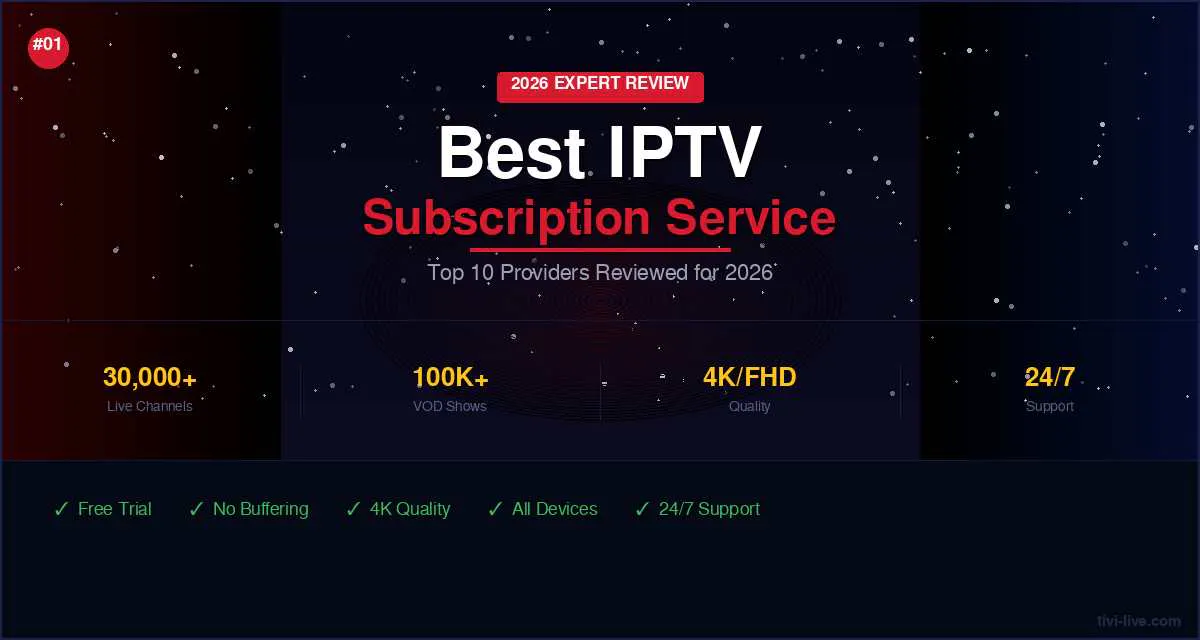
IPTV stands for Internet Protocol Television. Instead of receiving a broadcast signal through a cable line, satellite dish, or antenna, your device pulls video from a remote server over your broadband connection. When you press play on a channel or video, your app requests a stream; the server sends compressed video in data packets; your device decodes and displays it in real time. The illustration above shows that path from server to screen.
This matters for buyers because you are not just buying a channel list. You are depending on the provider’s server capacity, the quality of your home network, and the compatibility of your streaming app. If any one of those is weak, you will notice buffering, blocky video, or channels that fail to load during a match. Understanding how IPTV works helps you avoid buying a subscription that looks cheap but performs badly when it matters.
Below is a practical buyer’s checklist. It covers the criteria that actually predict reliability, the questions to ask a seller, warning signs to avoid, and how to set up IPTV on a smart TV, Firestick, or other device.
Why Many People Regret Their IPTV Choice
Most IPTV regrets come from buying a provider before understanding how the system fails under load. A cheap subscription may work fine on a Tuesday afternoon but freeze during a Champions League match because the seller has oversold the same server. People then blame the app or their internet, when the real issue is server congestion.
Another common regret is buying for the wrong device. A service that runs smoothly on an Android box can perform poorly on a Samsung smart TV if the provider’s app has memory leaks or limited codec support. Buyers often skip the trial period or test only one channel instead of testing live sports, VOD, and catch-up during peak evening hours.
Finally, some buyers ignore payment security and legal risk. They pay through an untraceable method, get no receipt, and lose access after a few weeks. Understanding the criteria below prevents most of these mistakes.
- • Server distance and CDN capacity
- • EPG accuracy and channel catch-up
- • Number of simultaneous connections allowed
- • App updates and support response time
Criteria That Should Drive Your Decision
Device compatibility: how does iptv work on smart tv and Firestick
The exact answer to how does iptv work on smart tv depends on the operating system. Samsung and LG TVs do not run standard Android apps, so you may need an IPTV player from the TV’s app store or a provider that supports an HTTP portal. On Android TV and Google TV, you can install apps like TiviMate or IPTV Smarters directly. For a Firestick, setup usually involves enabling “Apps from Unknown Sources” in the developer menu and sideloading an APK through the Downloader app. If a seller cannot explain these steps for your specific device, that is a red flag.
Server quality, uptime, and live sports
For live sports, the best iptv service for live sports is not the one with the biggest channel list. It is the one with multiple sources for major sports channels, stable CDN routing, and enough capacity to handle high-traffic games. Ask whether the provider uses load balancing, where servers are located, and how they handle peak-time buffering. A provider that says “zero buffering” is almost always lying. Instead, look for one that explains buffering honestly and offers a iptv buffering fix guide based on network diagnostics, not excuses.
Content, EPG, and simultaneous streams
Check whether the subscription includes a working electronic program guide (EPG), catch-up or time-shift, and how many devices can stream at the same time. Some cheap plans allow only one connection, which makes them useless for a household with a living room TV and a bedroom Firestick. Also look at VOD libraries: a huge but outdated library is less useful than a smaller one that updates new episodes quickly.
Payment, support, and legal risk
Technology itself is legal. Is IPTV legal in the US? Yes, when it is licensed. Official IPTV services like YouTube TV, Hulu + Live TV, and Sling are legal because they pay for broadcast rights. Unverified services that offer every premium channel for a few dollars a month often are not. That does not automatically mean you will face legal trouble, but it does mean the service can disappear overnight, and your payment may not be protected. We will cover warning signs shortly.
What You Need to Know About the Current Market
The IPTV market has split into three categories. First, official services: these include cable replacement apps and telecom IPTV packages. They are stable but expensive and often region-locked. Second, unverified IPTV subscriptions: these are sold through forums, social media, and messaging apps. They offer huge channel lists for low prices but have unpredictable uptime and legal risk. Third, hybrid or grey-area services: they claim to be legal but do not show licensing details. Many use reseller panels and disappear quickly.
Reddit threads can help you spot provider patterns, but be wary of fake reviews. When reading iptv review reddit 2025 discussions, look for users who mention long-term testing, not just one-day trials. A provider that only has five-star posts from new accounts is often running a promotion campaign. Also, the current market has many resellers of the same upstream source. That means two different “brands” may be selling identical streams with different support quality. Support is often the differentiator.
IPTV vs Cable: Pros, Cons, and Real Trade-offs
If you ask iptv vs cable which is better, the honest answer depends on your viewing habits, internet stability, and tolerance for occasional technical troubleshooting. Cable is more predictable; IPTV tends to be more flexible and less expensive.
✓ Benefits & Pros of IPTV
Lower monthly cost for comparable channel counts
Works on multiple devices without renting boxes
Easy to switch providers without a technician visit
Often includes VOD, catch-up, and international channels
✗ Limitations & Cons of IPTV
Quality and uptime depend on your home network and provider server
Less predictable during high-traffic live events
Legal and payment risk with unverified providers
Requires some setup, app updates, and occasional troubleshooting
RECOMMENDED RESOURCE
how does iptv work
Review up-to-date regional server maps and infrastructure.
View the how does iptv work Platform →
Questions to Ask Before Buying
A short pre-sale conversation tells you more than a polished landing page. Run through these questions before entering payment details.
- 1Which apps do you officially support on my device?
- 2How many simultaneous connections are included?
- 3Where are your servers located, and do you use a CDN?
- 4Can I test during peak hours and during a live sports event?
- 5What is your refund policy if the service goes down?
- 6What payment methods do you accept, and do you provide a receipt?
- 7How do you handle EPG updates and channel takedowns?
- 8Is your service licensed, and can you show proof if requested?
Warning Signs to Spot Before You Pay
Certain claims should make you pause before entering your payment details. These warning signs are more reliable than any marketing graphic.
- • “All channels in 4K” — most live channels still broadcast in 720p or 1080i; a provider claiming all 4K is exaggerating.
- • “Zero buffering” — no service can guarantee that.
- • Prices below $5 per month for thousands of premium channels — often means stolen or restreamed content and overloaded servers.
- • No trial or only a 24-hour trial that avoids weekends and sports.
- • Sellers who only accept cryptocurrency or gift cards with no refund path.
- • No clear website, support email, or terms of service.
- • Pressure to pay for a year upfront.
Comparison Table: Cable TV vs IPTV Subscription
Compare premium line configurations and promotional limits.
Check Out how does iptv work Deals →
How to Set Up IPTV on a Firestick or Smart TV
The exact setup steps vary, but the process below covers most devices. If you are wondering how to set up iptv on firestick specifically, the Downloader method is the most common route.
- 1Install the player app: On Firestick, install Downloader from the Amazon Appstore. On smart TV, use Samsung/LG app store or install TiviMate on Android TV.
- 2Enable unknown sources: Firestick: Settings > My Fire TV > Developer options > Install unknown apps > Downloader ON.
- 3Enter the download URL for the IPTV app or provider APK.
- 4Install and open the app; log in with credentials, Xtream Codes, or M3U playlist URL.
- 5Configure EPG and player settings; set buffer size to medium or high if needed.
- 6Test on Ethernet or 5 GHz Wi-Fi; restart router/modem and close background apps.
Recommendation by Budget and Needs
Budget under $15/month and tech-savvy: Consider a reputable unverified IPTV provider with a trial, but accept the risk. Use a virtual card or payment method with buyer protection, and avoid annual plans until stability is proven.
Budget $20–$40 and live sports priority: Look for a provider with multiple sports sources, catch-up or cloud DVR, and at least two simultaneous connections. Test during a major match before paying for more than one month.
Budget $50+ or maximum reliability: Official IPTV services like YouTube TV, Hulu + Live TV, or Sling offer DVR, legal clarity, and consistent sports coverage. You sacrifice some channel list size but gain predictability.
Household with multiple devices: Prioritize simultaneous connections and app compatibility across smart TVs, Firestick, phones, and tablets. A provider with strong EPG and a responsive support channel reduces daily frustration.
How to Maximize Your IPTV Investment
Even a solid subscription can feel unreliable if your home network is not optimized. Use Ethernet or strong 5 GHz Wi-Fi instead of 2.4 GHz. Avoid VPN unless the provider is geo-blocked; if you must use one, choose a nearby server to reduce added latency.
Restart your router before big games, and close other bandwidth-heavy devices. Update your IPTV app and device firmware regularly. On Firestick, clear the app cache every few weeks to prevent sluggish navigation. A player like TiviMate often improves EPG and codec support compared with generic provider apps.
Do not buy long-term plans until a provider proves stable for at least a month. Use a monthly subscription first, and keep a backup option for critical events if your budget allows. If buffering persists only during evening hours, the provider’s server capacity is likely the cause, not your internet.
How does IPTV work? It is a flexible delivery method, but reliability depends on provider infrastructure and your setup. Use the criteria above to test before paying, avoid warning signs, and choose based on device, sports needs, and risk tolerance. If you want to compare a provider’s server maps and current configurations, the resource below is a starting point.
Featured Streaming Selection:
See how does iptv work Pricing →Affiliate Disclosure: Clicking this secure link verified by our network supports our team through standard partnership terms at zero extra cost to your invoice.
Frequently Asked Questions
This article contains affiliate links. Our editorial analysis remains independent.