By James K. · Updated 2026-08-14 · 14 min read
If you are reading this because you found yourself asking "how does IPTV work" right before pulling out your card—good. That is the right moment to ask. IPTV stands for Internet Protocol Television: the content reaches you as data packets over your internet connection instead of through a coaxial cable or a satellite dish. On your screen it looks like normal live TV, but the delivery path is completely different.
The buying stage is where the confusion starts. The same phrase covers licensed services, gray-market resellers, premium sports providers, and cheap apps installed on a Fire Stick in minutes. This guide explains how does iptv work on smart TV and streaming devices, which criteria separate a provider that lasts from one that vanishes, and exactly where you should put your money.
Why Many People Regret Their IPTV Choice
Most IPTV regret stories do not start with bad technology. They start with a tempting deal that dies in the first three months. The pattern repeats: you find a provider offering 20,000 channels for a fraction of cable pricing, pay for twelve months to lock in the discount, and then the channel list starts breaking. Live sports freeze because the single server behind the service is overloaded. The electronic program guide (EPG) loads blank, so you no longer know when the game starts. Emails to support bounce, and the Telegram group goes silent.
Some regret comes from mismatched expectations too. People buy a 4K sports package and try to stream it over a 10 Mbps DSL connection. Others expect cable-level reliability from a service they pay $5 a month for. All of these situations are avoidable once you know which criteria actually matter.
The Criteria That Should Drive Your Decision
Understanding how does iptv work on smart TV in real life means evaluating four things: server infrastructure, channel quality, device support, and responsiveness of the provider. Channel count is a vanity metric. A service claiming 30,000 channels can have half not working, with duplicate feeds in several languages. What matters is whether your five most-watched channels are available in FHD or 4K with a reliable EPG. That is what actually replaces cable.
The interface shown above is exactly what you should see during a trial: a clean channel layout, a working program guide, and live sports organized by league rather than a chaotic list of unusable links. If the trial looks messy, the paid service will look worse.
Server infrastructure. The best iptv service for live sports in your region is the one with enough bandwidth on the route between their server and your modem. A trial at 3 PM will not show you peak-time behavior. Ask where the servers are located and whether the provider uses multiple data centers. During a big match, the server is the single point of failure.
Device compatibility. Samsung and LG smart TVs do not run Android apps without an external device, so IPTV typically needs a Firestick, Chromecast, or Android TV box. Sony, Philips, and TCL Android TVs install IPTV apps directly from the Play Store. Always verify that your exact device is supported before paying.
Simultaneous connections. If you watch football in the living room while the kids stream cartoons on the bedroom TV, you need at least 2 connections. Most budget plans offer only 1. Providers often hide this detail in the fine print, so ask directly.
Support and payments. Real providers answer within minutes during the trial and offer a refund for the first week. If they only accept cryptocurrency and do not issue receipts, they are signaling they do not plan to stay in business long.
What You Should Know About the Current IPTV Market
The question "is iptv legal in the us" comes up in every serious buyer's evaluation. IPTV is just a technology. The legality depends on whether the provider owns distribution rights for the channels it sells. Licensed IPTV services like YouTube TV or Hulu + Live TV pay for their content. Unlicensed providers sell cable channel streams without rights agreements, which places them in a legal gray zone. As a consumer, you are rarely pursued, but the risk is that the provider gets shut down and your prepaid months disappear.
The market itself is uneven. At the top, premium IPTV services operate with global server networks, immediate support, and honest monthly pricing. At the bottom are resellers buying bandwidth from other resellers. A quick scan of "iptv review reddit 2025" shows the same conclusion from users worldwide: buy month-by-month first, test during peak time, and only extend once stability wins.
8 Questions to Ask Before You Buy
Before you hand over payment details, send these exact questions to the provider. The answer tells you everything.
- Do you offer a free trial with full access to the channel list?
- How many simultaneous connections are included in the basic plan?
- Where are your servers located, and do you use load balancing?
- What bitrate do your FHD sports channels stream at, and is 4K available?
- Is the EPG synced correctly for sports and news channels in my country?
- Which devices do you officially support, including Firestick and Android TV?
- What is your refund policy if the service fails within the first week?
- How do I reach support: email, Telegram, WhatsApp, or live chat?
If a provider cannot answer those questions, the reality is that IPTV will not work for you in a reliable way. Move on.
Warning Signs That Scream "Unreliable IPTV"
- No trial at all—a provider that knows you will leave will not offer one.
- "Lifetime subscription" for a one-time payment. Server costs mean this model collapses quickly.
- No physical address, phone number, or company name anywhere on the site.
- Payments accepted only in cryptocurrency with no invoice or receipt.
- Channel lists copied directly from other providers, including their dead links.
- Fake countdown timers and aggressive discounted offers that expire every hour.
- No refund policy anywhere in the terms and conditions.
If the provider ticks two or more of these boxes, do not spend money to "test" them. You will be back at the top of this article writing a regret story.
Comparison: What You Are Actually Paying For
This matrix reflects the real market today. Apply these rows to any provider you evaluate, including the one recommended at the end of this article.
The bottom line is simple: if you pay $4, you get a $4 service. If you want IPTV to replace cable completely, the premium tier is the only realistic option.
IPTV vs Cable: Which Is Better for You?
Let's settle the "iptv vs cable which is better" debate with concrete criteria rather than nostalgia.
✓ Benefits & Pros
Lower monthly cost than cable for the same channel lineup
Watch on Firestick, smart TV, tablet, phone, or laptop
No contracts, no equipment rental fees
International sports packages in one app
Built-in VOD library with movies and series
✗ Limitations & Cons
Requires stable internet (25+ Mbps for reliable 4K)
Quality varies heavily between providers
Unlicensed providers can disappear without warning
Setup is not always plug-and-play
No local customer service line
RECOMMENDED RESOURCE
how does iptv work
A serious IPTV setup should include a free trial, stable sports channels, and responsive support. The provider featured here checks all three boxes and is a solid baseline for your comparison.
See how does iptv work Pricing →
Which IPTV Option Fits Your Budget and Needs?
The Fire TV Stick setup above is the standard way most viewers run IPTV at home. But which service tier fits your situation?
Budget under $8 per month. If cost is the primary driver, purchase monthly or quarterly, never annually. Use a mid-tier provider, stick to their native app, and keep your expectations realistic for peak evening hours. A VPN may improve performance if your ISP throttles streaming.
Sports fans. If you are searching for the best iptv service for live sports, your priorities are FHD/4K sports channels, stable streams during high-traffic matches, and an EPG with correct kickoff times. Sports streams are the most demanding test of any IPTV service, so never commit without testing during a live match in your timezone.
Families. A family plan needs at least 2–3 simultaneous connections, accurate EPG data for kids' channels, and an interface that anyone can navigate. It must work across multiple TVs or Firesticks under one subscription without separate accounts per device.
Travelers. If you travel internationally, choose a provider with optimized routes across continents and confirm they allow VPN traffic. Nothing is worse than a subscription that only works at home.
Review up-to-date regional server maps and infrastructure before committing to a long-term IPTV subscription.
View the how does iptv work Platform →How to Maximize Your IPTV Investment (And Stop Buffering)
You have picked a provider. Now let us make sure you set it up correctly. The most common complaint after subscribing is buffering, and in most cases it is not the provider's fault. It is the local network setup. This is your iptv buffering fix guide.
- Connect your Firestick or Android box to the router via Ethernet. If impossible, use 5 GHz Wi-Fi instead of 2.4 GHz.
- On your streaming device, keep "hardware decoding" enabled in the IPTV app settings.
- Disable any "auto bandwidth" option that reduces quality unnecessarily.
- Set the EPG update to once every 24 hours at 4 AM when you are not watching.
- Restart your router weekly. IPTV buffering is frequently caused by a router that has been online for months and has degraded performance.
- If you use a VPN, select WireGuard or UDP/OpenVPN instead of TCP when your provider supports it.
- Ask the provider for an alternate server URL if buffering persists. A genuine provider will give you one and help you test it.
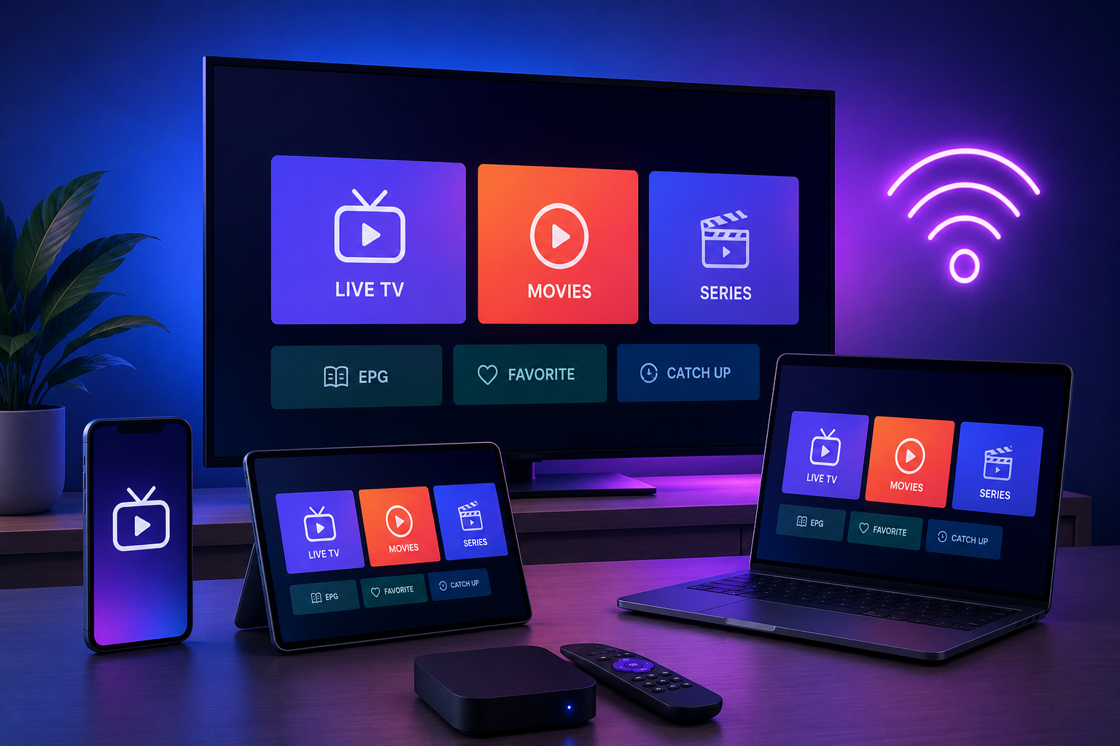
The diagram below shows exactly where the streaming path can break. Understanding it helps you communicate with support instead of guessing.
The Bottom Line: Should You Buy IPTV?
IPTV works, and it works well if you treat it like any serious purchase: test first, inspect the criteria above, and pay monthly until the service proves itself. The best advice remains unchanged—never buy a year upfront from a provider you only saw in a social media ad. The difference between a frustrating experience and a great one is not the IPTV technology; it is the provider behind it.
If you want a service that handles the basics well—stable servers, clear device instructions, responsive support, and a genuine trial—the provider linked below is a good place to begin your comparison. Start there, test it against your shortlist, and then decide with your eyes open.
Featured Streaming Selection:
Find Out More About how does iptv work →Affiliate Disclosure: Clicking this secure link verified by our network supports our team through standard partnership terms at zero extra cost to your invoice.
Frequently Asked Questions
This article contains affiliate links. Our editorial analysis remains independent.